Today I would like to focus on one of the nemeses (yep, I really did just use Merriam- Webster to make sure that was the plural of the word) of marathon training; strides.
In college, I loved doing strides.
Okay, love may be a little strong, but I used to feel powerful and fast striding up and down the turf, mostly thanks to the other speed work that complemented my 5k/10k training.
Strides gave me a pop in my step, which always led to a fast last lap to surprise even myself as I crossed the finish line.
However, now I am slow…well, slow compared to 4:45 mile speed in college, lacking the kick I had in the “good old days”.
Now, strides hurt.
They feel awkward, and all my muscles scream out in discomfort as they wonder why they could suddenly be expected to move so fast after over an hour of going a comfortable pace?
Whatever distance you are training for, be it 5k, 10k, half marathon or marathon training, strides should become an essential part of your routine before every workout, and another 2-3 times after recovery runs.
In case I am not enough motivation for you, American Record Holder Molly Huddle runs 6 strides after every recovery run, “I’ll try to focus on knee lift and getting a quicker and lighter turnover than during the easy run”.
Running Times also backs her up stating that strides allow you to improve coordination between the nervous system and the muscles.
What is a stride and what does a good one look like?
Within 5-10 minutes of finishing your easy/recovery runs, you should find a flat stretch of road or track around 100m long where you can run for 15-20 seconds. A track is ideal, as you can measure out the distance.
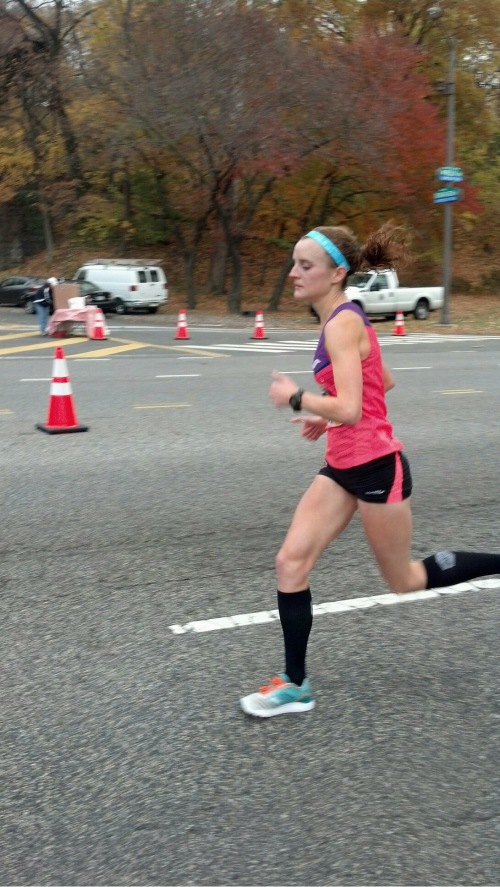
Running significantly faster than you have been for the rest of your run, but not all out, you should open up your running stride, pumping your arms, and focusing on your form.
You should get up to 80-85% of your maximum speed by the middle of the stride, before slowing down again.
It may feel a little uncomfortable at first, and I usually notice my hamstrings do not enjoy the first few. It will get better!
Give yourself 30-90 seconds recovery before doing a stride back.
Complete 4-6 strides, and then follow your usual post run routine.
[youtube http://www.youtube.com/watch?v=Jf78F7jq52M]
And here is another one coming back
[youtube http://www.youtube.com/watch?v=qvZgThwBP9U]Running strides after recovery runs will help your body to get used to a different speed, so you can not only finish a race faster, but your body is better prepared to handle pace changes during a race.
How to use strides before workouts
Strides should also be completed before a workout to fire up your fast twitch muscles to simulate a race as you run race/workout pace for a few seconds.
If 6 x 20 seconds is too many, try doing just 2- 4 of shorter 10-15 second strides. I usually do 4; then give myself 2-3 minutes for my heart rate to come down a little, before starting the workout.
The start of a race is always fast, and you always want to finish a race fast, so why not train your body ahead of time so you can run your best on the day it matters?