
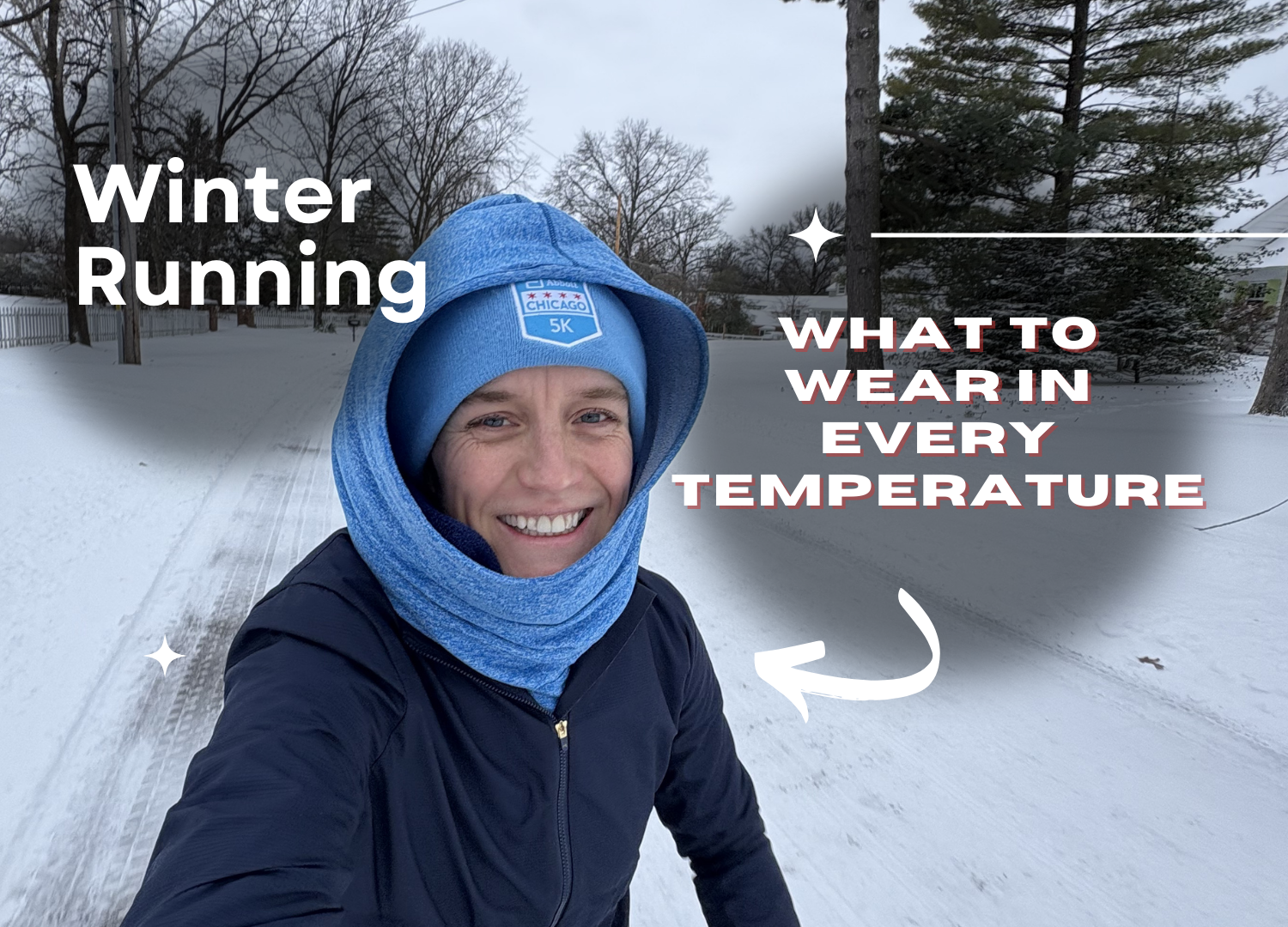
It can be difficult to figure out what to wear running in the cold. Sure, you can use one of those calculators that give you recommendations for winter running gear, but how about real advice for running in cold weather?
After years of cold weather running, I’ve put together this complete guide to winter running gear, based on my real life experience. I’ve broken down exactly what to wear running in cold weather — from 50°F / 10°C to below 20°F / -7°C — along with my suggestions on how to adapt for running in wind or rain, and for hard workouts.
The images are to give you an idea of what I’m talking about, but I deliberately haven’t included recommendations for specific items because there’s a good chance you already have something in your closet that will work, so there’s no need to buy more clothes!
If you do need to buy something new, opt for well-made garments that will last a long time. Even if they cost a little more, ultimately it will be less expensive than replacing cheaper (in every sense of the word) items, and better for the planet.
How to Dress for Winter Running Workouts
If you’re running hard, dress as if it’s 5–10 degrees warmer than the actual temperature. You will be much warmer than you would if you were just easy/recovery running.
BUT:
You should try to wear clothes appropriate for the actual temperature it is for your warm-up. When you come to the workout portion of your run, take the layers off, so you are dressed as if it is 5-10 F degrees warmer than the actual temperature.
For example:
If it is 45°F / 7°C outside, and you have a tempo run, you should warm up using the 45°F / 7°C recommendations below, but when you start the hard part, you should dress as if it is 50-55°F / 10°-13°C outside, as you will get hot otherwise!
What to Wear Running in Windy Conditions
Consider dressing for a temperature that is 5-10 degrees F lower than the actual temperature, as the wind will cut through your clothing, making you feel colder.
For example:
If it’s 50°F / 10°C but windy, dress as if it’s 40–45°F / 4-7°C.
Bonus Tip:
Try to run into the wind first, so that you get the hard part out of the way, and as you are dressed for colder weather, it will feel colder than it is.
That way, on the way back, not only will you have a nice run back with the wind, but you can take off a layer if you need to.
I also have a post with tips on how to run in the wind.
What to Wear Running in the Rain During Winter
Obviously, a waterproof jacket is ideal, but keep in mind they trap sweat inside, so you may not end up completely dry, as the sweat will build up inside your coat. However, a waterproof jacket is going to remove a lot of the discomfort associated with running in the rain.
You should definitely dress for a temperature of 5-10 degrees F cooler than the actual temperature. You will get cold much quicker with the rain soaking your clothing, especially if there is any kind of wind.
For example:
If you do not have a waterproof jacket and it is 40°F / 4° C, dress as if it is 30°F / -1°C.
If you do have a waterproof jacket, I would dress as if it is 35-40°F / 2-4°C.
I would also recommend wearing a hat (either with or without a headband/hat underneath) to keep the rain out of your eyes, so you can see clearly.
What to Wear Running at Every Temperature
Here’s a breakdown of what to wear running in cold weather at every 5°F interval — let’s start with the warmest.
50°F / 10°C:
- Thin, long-sleeved shirt, preferably made of a material that is going to wick the sweat away
- Comfortable shorts
- For longer hair, a headband to keep hair out of your face
45°F / 7°C:
- Slightly thicker long sleeve shirt, or T-shirt plus a thin long sleeve
- Longer shorts or capris
- Thin, moisture-wicking socks
- Hat

40°F / 4°C:
- A medium thickness long-sleeve with windproof outer vest OR moisture-wicking t-shirt underneath your long sleeve
- Half-length tights/capris
- Male identifying runner, you may prefer shorts or pants at this temperature, this will be a personal preference
- Lighter headband to keep ears warm, but not too thick to cause excess sweating. It is not cold enough to require it, but personal preference.
- Thin, windproof, waterproof gloves

35°F / 2°C:
- Thicker long sleeve made of a moisture-wicking material OR second layer of long sleeve
- Running tights or pants
- Lighter headband to keep ears warm, but not too thick to cause excess sweating
- Thin, windproof, waterproof gloves

30°F / -1°C:
- Two long-sleeve layers: one thin base layer, plus a thicker long sleeve
- Thicker running tights or pants
- Fleece headband to keep ears warm OR hat
- Thicker gloves or mittens

25°F / -4°C:
- Thick, high rising long sleeve (I like a fleece inside)
- Windproof, water-resistant running jacket OR a thicker long sleeve underneath
- Thicker running tights
- Hat
- Mittens
- Thicker, moisture-wicking socks (make sure they cover your ankles!)

Below 20°F / -7°C:
- Two long sleeves; depending on how much under 20 degrees it is, you may want to use at least one thicker long sleeve
- Wind/water resistant running jacket
- Two pairs of tights
- Thicker hat, with fleece inside
- Two pairs of gloves
- Neck gaiter
Bonus tip:
HotHands warmers are lifesavers on really cold days. You can find them at stores including Target, CVS, Lowe’s, and Home Depot.

Final Thoughts:
I don’t really believe there is a too-cold-to- run situation, but below 10°F / -12°C is probably getting pretty close. But overall, with the right winter running gear and layering strategy, you can train comfortably through almost any weather.
Experiment with what works best for you, and remember: it’s better to start slightly chilly than to overheat halfway through.